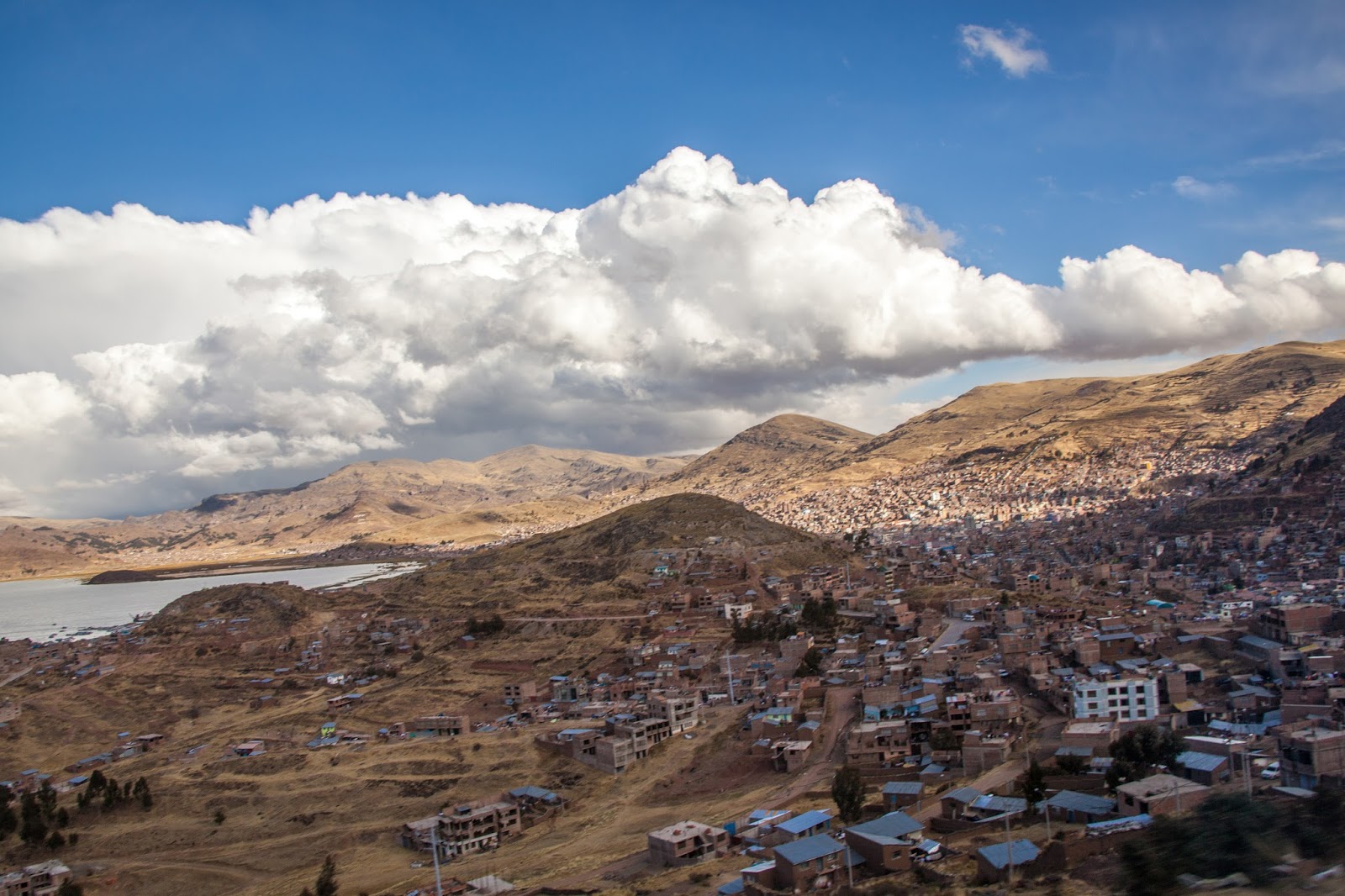
I had the most spectacular view of the sunrise out my window this morning. I actually had to wait for the sun to rise because I woke up while it was still dark, we have a long travel day before us and we needed to get an early start.


We made a quick stop at this exquisite church in the tiny district of Juli while all our luggage was put aboard the hydrofoil we would be riding into Bolivia. Say what you will about traveling in a tour, but at times like this, when my luggage was magically taken from my room and put directly onto the boat all while I was enjoying beautiful art and architecture, or when I am just handed a ticket to the attraction we are visiting instead of trying to figure out how to do it all in a different language, I can't think of much to complain about, they sure know how to make everything a pleasant experience.


Then it was time to board our Titicaca Hydrofoil and effortlessly speed across the boarder between Peru in Bolivia. (Hydrofoils let a boat go faster by getting the hull out of the water. When a normal boat moves forward, most of the energy expended goes into moving the water in front of the boat out of the way (by pushing the hull through it). Hydrofoils lift the hull out of the water so that you only have to overcome the drag on the foils instead of all of the drag on the hull.) There is no distinct area of where the border between these two countries is when on Lake Titicaca, it's more of a general area. So after zooming through the water for a while our tour guide announced that we had probably crossed over and were now in Bolivia.


We stopped at Isla del Sol, or the Island of the Sun for lunch. I thought this island was beautiful, it is rather small and reminded me a lot of the island of Tequile in Peru. There are no motor vehicles or paved roads on the island. The main economic activity of the approximately 800 families on the island is farming, with fishing and tourism augmenting the subsistence economy. Of the several villages, Yumani and Cha'llapampa are the largest.
There are over 80 ruins on the island. Most of these date to the Inca period circa the 15th century AD. Archaeologists have discovered evidence that people lived on the island as far back as the third millennium BCE. Many hills on the island contain agricultural terraces, which adapt steep and rocky terrain to agriculture. Among the ruins on the island are the Sacred Rock, a labyrinth-like building called Chicana, Kasa Pata, and Pilco Kaima. In the religion of the Incas, it was believed that the sun god was born here.


And this is where we had lunch, with breathtaking views of the lake and the beautiful blue skies! It was the most perfect lunch, all 35 of us sat together at one long table and enjoyed a wonderful buffet lunch of Bolivian delights.


Then it was back on the Hydrofoil for more traveling, La Paz is a pretty good distance away from Puno. To break up the trip a little bit and to have a little fun, our cute tour director came around and gave each of us a blessing from the Incan God of Lake Titicaca, we even got a certificate and everything, so it was pretty legit.


Our Bolivian guide gave us these adorable little reed boats when we finally disembarked the hydrofoil as a thank you for visiting the unique and beautiful Lake Titicaca

While the luggage was being transported from the hydrofoil to our next mode of transportation, a bus, we had some time to visit the cutest little outdoor museum, they have right on the dock.


Life saving coca leaves! Seriously, the best remedy for altitude sickness there is! (If only they tasted good...)


From the dock we had about a two hour bus ride to our hotel in downtown La Paz, so much traveling today! We did get amazing views of the majestic Andes Mountain range as we drove.


Next stop: The bustling city of La Paz, Bolivia!